Corporate Governance Statement

The Group applies the principles and provisions of The Combined Code on Corporate Governance (the "Combined Code") as adopted by the Irish Stock Exchange and the UK Financial Services Authority. The Board believes that it is in compliance with the Combined Code except that the Chairman of the Group was deemed the most suitable member of the Remuneration Committee to act as Chairman given his broad range of experience.

Board of Directors

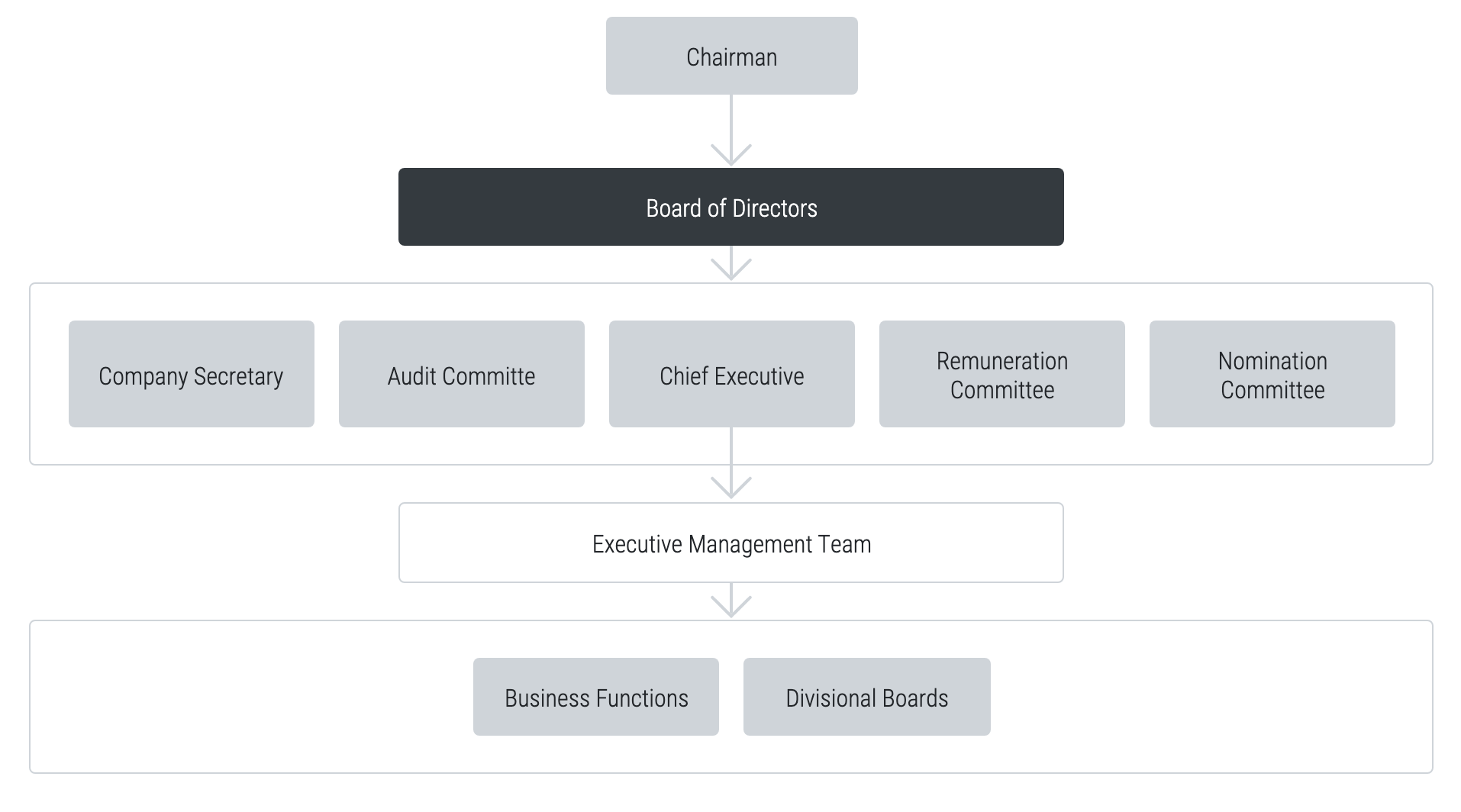
The Board consists of three executive and three non-executive directors. Pursuant to the Articles of Association, the directors of the Company are empowered to exercise all such powers as are necessary to manage and run the Company, subject to the provisions of the Companies Act.

Non-executive directors are appointed by the Board for an initial term not exceeding three years. The terms and conditions of appointment of non-executive directors are set out in their letters of appointment, which are available for inspection at the Company’s registered office during normal office hours and at the Annual General Meeting of the Company. The roles of Chairman and Chief Executive are separate, set out in writing and approved by the Board. The Board has appointed Peter Crowley as the Senior Independent Director. Each director brings independent judgement to bear on issues of strategy, risk and performance. Each director is subject to re-election at least every three years, and annually where they have served 3 terms.

Board Procedures

The Board holds regular meetings (normally at least nine per annum) and there is contact between meetings as required in order to progress the Group’s business. The directors receive regular and timely information in a form and quality appropriate to enable the Board to discharge its duties. The Board has a formal schedule of matters specifically reserved to it for decision, which covers key areas of the Group’s business including approval of financial statements, budgets (including capital expenditure), acquisitions or disposals, dividends and share redemptions. Certain additional matters are delegated to Board Committees. The Board has also delegated the management of the Group to the Executive Management through the control of the Chief Executive.

The Chairman holds meetings with the non-executive directors without the executive present and the non-executives also meet once a year without the Chairman present to appraise the Chairman’s performance.

There is a procedure for directors in the furtherance of their duties to take independent professional advice if they consider this necessary. All directors have access to the advice and services of the Company Secretary who is responsible to the Board for ensuring that Board procedures are followed and that applicable rules and regulations are complied with.

The Board recognises the need for directors to be aware of their legal responsibilities as directors and it ensures that directors are kept up to date on the latest corporate governance guidance and best practice. New directors are given the opportunity to familiarise themselves with the operation of the Group, to meet with executive management, and to access any information they require.

Board Committees

During the year ended 31 December 2009, there were three standing Board Committees with formal terms of reference; the Audit Committee, the Nomination Committee and the Remuneration Committee. The terms of reference of each committee are available, on request, from the Company Secretary and on the Group’s website.

The Audit Committee

The Audit Committee comprises the non-executive directors Peter Crowley (chairman) and Bernard Somers.

Its duties are to oversee the relationship with the external auditor, including consideration of the appointment of the external auditor,audit fees, and any questions of independence, resignation or dismissal. The committee discusses with the external auditor the nature and scope of the audit and the findings and results. The committee also monitors the integrity of financial statements prepared by the Company.

The committee keeps under review the effectiveness of the Company’s internal controls and risk management systems, including the internal audit function. It reviews the internal audit programme, ensures that the internal audit function is adequately resourced, and considers the major findings of investigations and management’s responsiveness to these findings and recommendations.

The Audit Committee has considered all relationships between the Company and the audit firm, including the provision of non-audit services. The committee does not consider that those relationships impair the auditors’ judgement or independence.

For further details on the Audit Committee please click here

The Nomination Committee

The Nomination Committee comprises the non-executive directors John B. McGuckian (chairman) and Peter Crowley and executive director Eamonn Rothwell.

Its duties are to regularly review the skills, knowledge and experience required of the Board, now and in the future, compared to its current position and to make recommendations to the Board with regard to any necessary changes. It is also charged with searching out, identifying and proposing to the Board new appointments of executive or non-executive directors.

For further details on the Nomination Committee please click here

The Remuneration Committee

The Remuneration Committee comprises the non-executive directors Peter Crowley (Chairman) and John B. McGuckian.

The committee’s duties are to approve the remuneration structures and levels of the executive directors and senior management. It ensures a remuneration policy framework such that individuals are appropriately rewarded and motivated to perform in the best interest of the shareholders.

All of the non-executive directors are considered by the Board to be independent of management and free of any relationships which could interfere with the exercise of their independent judgement. In considering their independence, the Board has taken into account a number of factors including their length of service on the Board, cross-directorships and material business interests. John B. McGuckian, as Chairman of the Board, is deemed not to be independent under the terms of the Combined Code.

For further details on the Remuneration Committee please click here

Attendance at scheduled board meetings and board committee 2010

Director Board Audit Nomination Remuneration
Scheduled Meetings 8 3 1 2
J. B. McGuckian (2 & 3) 8 - 1 2
P. Crowley (1, 2 & 3) 7 3 1 2
B. Somers (1) 6 3 - -
E. Rothwell (2) 8 - 1 -
G. O’Dea 8 - - -
T. Kelly 8 - - -
  1. Member of the Audit Committee
  2. Member of the Nomination Committee
  3. Member of the Remuneration Committee

Communications with Shareholders

The Board promotes good communications with shareholders and the Group commits resources to shareholder communication commensurate with its size. Other than during close periods and subject to the requirements of the Takeover Code, when applicable,the Chief Executive and the Finance Director have a regular dialogue with institutional shareholders throughout the year and report on these meetings to the Board. The Senior Independent Director is available on request to meet with major shareholders.

We encourage communications with private shareholders and welcome their participation at shareholder meetings. We provide regular formal updates to our shareholders in a variety of ways, including a trading update on the day of our Annual General Meeting and Annual and Interim Reports and Accounts, sent to all shareholders by post or electronically, and available on this site. Click here to view the investor Centre.

Each year the Annual Report and Annual General Meeting Notice will be sent to shareholders 20 working days before the meeting and for the level of proxy votes cast on each resolution, and the numbers for and against, to be announced at the meeting. In compliance with the Transparency Directive, quarterly Interim Management Statements will be issued during the year.

Internal Control

The Board has overall responsibility for the Group’s system of internal control and for reviewing its effectiveness. However, such a system is designed to manage rather than eliminate the risk of failure to achieve business objectives, and can only provide reasonable, and not absolute, assurance against material misstatement or loss.

In accordance with the Turnbull Guidance for directors on internal control, Internal Control: Guidance for Directors on the Combined Code, the Board confirms that there is an ongoing process for identifying, evaluating, and managing the significant risks faced by the Group, that it has been in place for the year under review and up to the date of approval of the financial statements, and that this process is regularly reviewed by the Board.

The nature of the Group’s business, which is primarily the operation of ships and provision of related services, is such that operational safety is paramount. Significant risks include risks to operational safety as well as financial risks. Our Group Risk Management function therefore comprises an Operations Risk Manager, Safety Security and Quality Systems Manager in the Ferries Division in addition to the Internal Audit function.

The key risk management and internal control procedures, which are supported by detailed controls and processes, include:

  • the Group Risk Management function;
  • an organisational structure with clearly defined lines of authority and accountability;
  • skilled and experienced Group and divisional management;
  • a comprehensive system of financial reporting involving budgeting, monthly reporting and variance analysis;
  • a formally constituted Audit Committee which reviews the operation of the Group Risk Management function, the Internal Audit function, liaises with the external auditors and reviews the Group's internal control systems.

The Board has reviewed the effectiveness of the Group's system of internal control. The review covered all controls including financial, operational, and compliance controls and risk management. No material weaknesses were noted by the Board during the year.

Performance Evaluation

The Chairman of the Board carried out a performance evaluation of the Board, its committees and directors, following the guidelines appended to the Combined Code. The non-executive directors carried out a similar evaluation of the Chairman.

Directors' Remuneration

The report of the Remuneration Committee is set out in the Annual Report please download the PDF version here.


About Us
ICG Image